
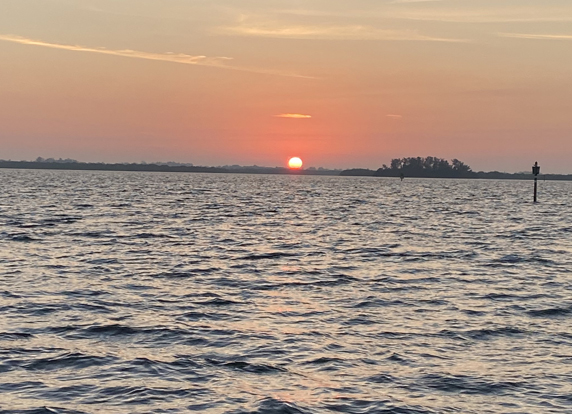
In Sarasota, summer fishing conditions usually mean hot, humid weather, high sun angles, and water temperatures pushing well into the upper 80s. As you move into fall (late August through November), you start to see gradual changes: slightly cooler nights, lower humidity, more frequent storms, and eventually the first cold fronts of the season. These environmental shifts heavily influence inshore fishing patterns.
During late summer, fish can still be spread out, holding in deeper water during the heat of the day and pushing shallow to feed in the mornings and evenings. As fall progresses, the water temperatures start to decline, oxygen levels rise, baitfish begin to migrate, and predators become increasingly aggressive. Sarasota Bay, Roberts Bay, Little Sarasota Bay, and the surrounding flats, passes, and mangrove shorelines all see noticeable shifts in activity during this period.
Water Temperature and Oxygen
One of the key factors to understand is how water temperature influences oxygen concentration. In summer, water temperatures in the high 80s can reduce dissolved oxygen, making fish sluggish during the hottest parts of the day. As temperatures drop into the low 80s and eventually the 70s, oxygen levels improve. This encourages fish to feed more aggressively for longer periods and allows them to hold shallower without stress.
This means that while late summer often requires very early or late fishing windows for success, the onset of fall broadens the opportunity. Fishermen can catch fish throughout more of the day, and aggressive feeding windows become more frequent.

Baitfish Migration
The late summer to fall transition in Sarasota coincides with large movements of bait. Schools of whitebait (pilchards), scaled sardines, glass minnows, threadfin herring, and mullet begin staging for migration.
- Whitebait: In late summer, pilchards are abundant on the flats and near passes. As fall arrives, large schools become concentrated, making them prime forage for predators.
- Mullet: Fall marks the mullet run, when huge schools push out of the bays toward the Gulf, especially during strong tides around new and full moons. Predators like snook, tarpon, jacks, and redfish follow these schools aggressively.
- Glass minnows: During the transition, massive rafts of glass minnows can blanket the beaches and flats, attracting everything from Spanish mackerel to ladyfish to juvenile tarpon.
Understanding where bait is staging and moving is often more important than knowing where gamefish were holding a week before. Fish follow food.
Key Target Species During the Transition
Snook
- Late Summer: Many snook are still in post-spawn mode near passes, beaches, and inlets. They can be caught in good numbers along Big Pass, New Pass, Siesta Key, and Lido Key beaches.
- Early Fall: As temperatures cool, snook start pushing back into Sarasota Bay, up creeks, canals, and mangrove shorelines. This is the beginning of their fall migration.
- Best Tactics: Free-lined whitebait or pinfish near structure or mangrove points. Topwater plugs at dawn and dusk, especially once temperatures moderate. Sight fishing along oyster bars, mangrove shorelines, and channel edges during falling tides.
- Behavioral Shifts: Snook feed heavily during this period to bulk up before winter. Their strike zones expand, and artificial lures become more effective than in the heat of summer when live bait often out-produces.
Redfish
- Late Summer: Reds are often scattered in smaller schools. They may hold under mangroves, on grass flats, or near oyster bars.
- Fall: September through November brings the peak redfish schooling season. Large groups of over-slot reds can be seen pushing wakes across shallow flats. In Sarasota, look around Buttonwood Harbor, Long Bar, and the grass flats of north Sarasota Bay.
- Best Tactics: Cut bait (mullet, ladyfish, pinfish) fished on the bottom near mangroves. Gold spoons or paddle-tail jigs worked along grass edges. Sight-casting live or artificial shrimp to tailing reds in skinny water.
- Behavioral Shifts: In summer, redfish are more solitary or in small pods, but in fall they become aggressive pack feeders. Large schools compete for food, often showing less caution.
Spotted Seatrout
- Late Summer: Trout are often found deeper, on grass flats in 6–10 feet. They can be lethargic mid-day.
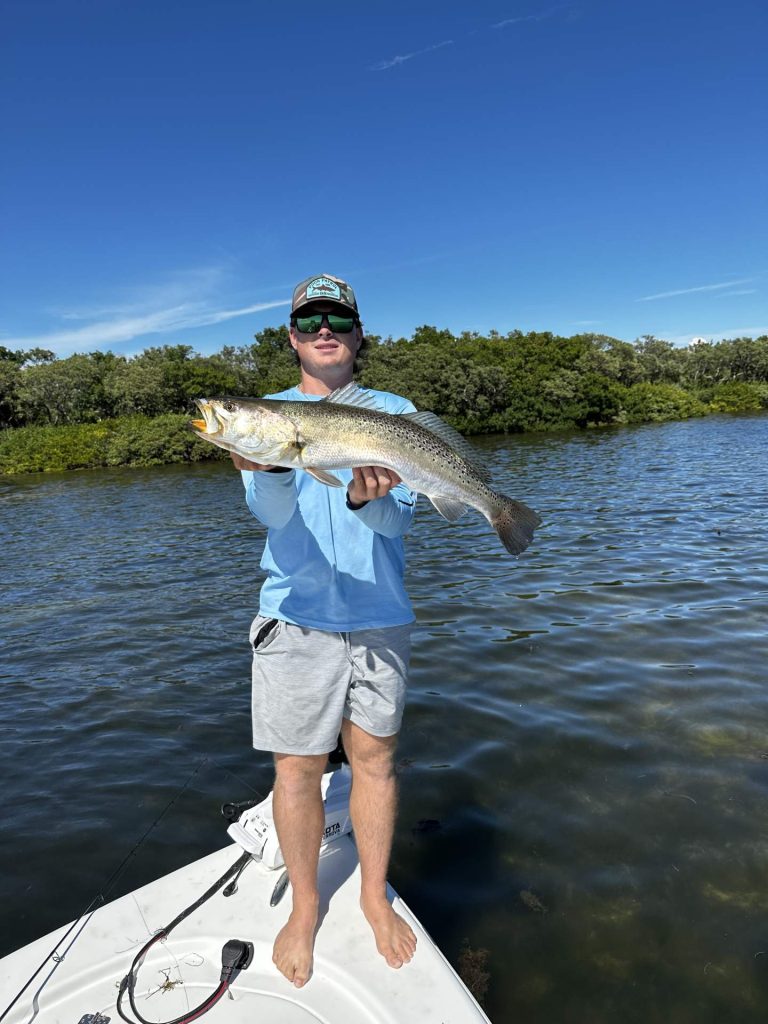
- Fall: As the water cools, trout move into shallower flats, especially 3–5 feet, and become more aggressive. Large gator trout often move shallower as well.
- Best Tactics: Live shrimp under popping corks over grass flats. Soft plastics on jig heads bounced across grass patches. Topwater plugs in the early morning for larger trout.
- Behavioral Shifts: Trout go from heat-stressed and sluggish in late summer to highly active in fall. They feed across more of the day and respond to a broader range of presentations.
Tarpon
- Late Summer: The main migration has ended, but juvenile tarpon (10–40 pounds) remain in creeks, rivers, and back bays.
- Fall: These juvenile tarpon continue to feed heavily on baitfish. Storm-driven water flow in creeks can concentrate them.
- Best Tactics: DOA TerrorEyz, small paddle-tails, or live mullet in brackish creeks. Fly fishing with dark streamer patterns around dawn.
- Behavioral Shifts: While summer adults leave, juveniles dominate fall fishing. Tarpon become more aggressive around moving water, often striking at bait forced out by tidal or storm flows.
Spanish Mackerel, Bluefish, Jacks, and Ladyfish
- Late Summer to Fall: As glass minnows and whitebait move, predators like mackerel, blues, and jacks blitz through Sarasota Bay and just off the beaches. Bird activity often reveals their location.
- Best Tactics: Fast-retrieved spoons, jigs, or Gotcha plugs. Chumming with whitebait to keep fish around the boat.
- Behavioral Shifts: These species transition from scattered summer feeding to fall blitzes. They group up, chase bait aggressively, and can often be spotted by the chaos of diving birds.
Sheepshead and Mangrove Snapper
- Fall: Both species increase in activity around bridges, docks, seawalls, and structure. Snapper remain aggressive until water gets colder, and sheepshead numbers rise steadily into winter.
- Behavioral Shifts: Snapper stay highly opportunistic as long as baitfish are present. Sheepshead begin their seasonal rise in abundance, responding to cooling water by feeding harder on crustaceans around structure.

Tides and Moon Phases
During summer, high daytime heat sometimes suppresses fish activity, so fishermen rely on low-light or tidal windows. In fall, tidal influence remains crucial, but fish extend feeding behavior across more of the day.
- Incoming tide pushes baitfish and shrimp toward mangroves and grass edges. Snook and redfish ambush along these areas.
- Outgoing tide concentrates baitfish exiting creeks and flats. Predators stack in channels, passes, and creek mouths.
- New and full moons create stronger currents that drive baitfish migrations, especially mullet. These moon phases in September–October are peak times for redfish schools and snook blitzes.
Weather Shifts and Storms
The end of summer is also peak hurricane season. Tropical storms and hurricanes can temporarily disrupt fishing, but they also reshape the environment. Freshwater influx, stirred-up nutrients, and displaced bait often lead to explosive feeding activity once conditions settle.
As fall progresses, the first cold fronts of the year bring shifts in wind and pressure. Pre-front conditions (falling barometer, southeast winds, warm moisture) often trigger aggressive bites. Post-front (northwest winds, cooler dry air) can push fish deeper or make them sluggish for a day or two before they stabilize.
Techniques and Presentations
Live bait remains dominant in Sarasota in late summer. Whitebait is cast-netted on the flats and used to chum and attract fish. As fall progresses, cut mullet becomes especially effective for redfish. Artificial lures increase in effectiveness as water temperatures drop. Topwaters, spoons, soft plastics, and suspending plugs all work well. Fly fishing opportunities expand in creeks and on shallow flats as fish become more responsive to movement-based presentations.
Locations to Focus
- Big Pass and New Pass for snook, mackerel, and jacks.
- Grass flats of north Sarasota Bay for trout and redfish.
- Buttonwood Harbor and Long Bar for fall redfish schools.
- Canals and creeks such as Hudson Bayou and Phillippi Creek for tarpon and snook.
- Mangrove shorelines of Siesta Key, Bird Key, and Otter Key for staging snook.
- Bridges and docks such as Ringling Causeway and Siesta Drive for snapper, sheepshead, and snook at night.
Gear Considerations
Medium spinning setups in the 2500–4000 range with 10–20 lb braid work well for trout, redfish, and school-sized snook. Heavier 4000–6000 reels with 20–30 lb braid are better for larger snook and tarpon. Fluorocarbon leaders from 20 lb for trout up to 60 lb for tarpon and mackerel are standard. Productive lures include topwater plugs, paddle-tails, gold spoons, and suspending twitchbaits. For live bait fishing, a cast net and livewell are essential.
Practical Tips for Success
Match the hatch by focusing on mullet and whitebait, since these are the primary baits that predators lock onto during the fall transition. Whether using live pilchards free-lined near structure or artificial lures like suspending twitchbaits, choosing something that mirrors natural forage will lead to more consistent strikes.
Stay mobile rather than waiting out a single spot, because bait schools shift quickly across Sarasota’s bays and predators follow them closely. Watching for bird activity, nervous water, or surface explosions provides the best chance of staying in the action.
Fish ahead of fronts whenever possible, as the hours leading into a cold front often produce the most aggressive feeding. Falling pressure and southeast winds are strong indicators of a hot bite, while the day after a front usually requires patience until conditions settle.
Explore backwaters as the season cools, because juvenile tarpon and snook often concentrate in narrow systems where tidal flow and storm runoff pull baitfish through. These overlooked spots can provide steady action when open flats slow down.
Shifting Into the Season Ahead
The late summer to fall transition in Sarasota brings some of the most rewarding inshore fishing of the year, with cooling water, migrating bait, and aggressive predators reshaping the entire fishery. For fishermen, it is a season that opens doors to longer feeding windows, more diverse opportunities, and some of the most dramatic shallow-water action of the calendar year. As the patterns shift, it becomes the perfect time to connect this knowledge with time spent on the water under the guidance of a professional service.
Run n Gun Fishing Charters guides Sarasota’s bays, passes, and backwaters all year, adjusting each trip to the season and conditions. Trips can focus on snook in the creeks, redfish schools on the grass flats, trout on the shallows, tarpon in the bays, or sheepshead around structure. Every outing is shaped by what the fishery offers, giving fishermen the chance to experience Sarasota at its best, so book your trip with us today and enjoy the water during this season.