
Each summer, Tampa Bay becomes a focal point for fishermen targeting one of the most powerful and recognizable game fish in the Gulf of Mexico. Tarpon draw attention not only for their size, but for their speed, stamina, and dramatic behavior at the surface. Fishermen who pursue them are often met with early mornings, long hours, and hard-fought battles that can test skill, patience, and physical endurance.
The presence of tarpon in this region is not incidental. Tampa Bay offers the structure, water temperature, and food supply needed to support large seasonal migrations. The fish come here with purpose, and so do those who chase them. The result is a fishery shaped by timing, tide, and close attention to detail. For anyone serious about saltwater fishing during the summer, learning how to approach tarpon in Tampa Bay is an essential part of the experience.
What Are Tarpon?
Tarpon (Megalops atlanticus) are large, migratory fish found throughout the Atlantic Ocean, Gulf of Mexico, and Caribbean Sea. They are known for their thick, silver bodies, large scales, upturned mouths, and deeply forked tails. In Florida waters, tarpon regularly reach weights between 70 and 150 pounds, with some individuals growing larger than 200 pounds.
Tarpon are built for movement and survival. They inhabit warm, shallow coastal zones, but can also thrive in rivers, lagoons, and estuaries. Their most unusual feature is their ability to breathe air, thanks to a modified swim bladder that functions much like a lung. This allows them to survive in oxygen-poor environments and is the reason they are often seen rolling slowly at the surface, taking gulps of air between dives.
Despite their size and the attention they receive, tarpon are not a food fish in Florida. They are protected by catch-and-release regulations, and harvesting them is illegal unless a special tag is purchased under limited conditions. Because of this, tarpon fishing is focused entirely on the challenge—hooking, fighting, and safely releasing a fish that is unmatched in size and power among Florida’s inshore species.

When Tarpon Arrive in Tampa Bay
Tarpon begin moving into the Tampa Bay area in late April, with the highest numbers present from May through August. The peak of the season is generally mid-June to late July, when conditions are most favorable and fish are actively feeding and staging to spawn.
Early in the season, schools tend to follow the beaches and gather around the mouths of passes. As the water warms, they move farther into the bay, entering river mouths, channels, and flats. Tide changes, bait migrations, and weather shifts all influence their daily movements. Success during this period depends on understanding where the fish are at any given time and how they respond to those changing conditions.
How to Spot Tarpon
Tarpon often give away their location if you know what to look for. Rolling is the most obvious sign—this is when a tarpon surfaces slowly, takes a breath, and slips back under. During calm conditions, these movements can be seen from a long distance. Fishermen often look for these signs early in the morning or during slack tides when the water is quiet.
Another giveaway is surface disturbance caused by feeding or cruising fish. These can appear as subtle boils, sudden pushes of water, or flashes of silver as the fish change direction. In some cases, birds may also signal tarpon activity, especially if baitfish are being pushed toward the surface.
It’s important to approach with caution. Tarpon are sensitive to engine noise and sudden boat movement. Many fishermen prefer to drift into position or use a push pole when fishing the flats, especially when sight casting.
Ideal Gear Setup
Tarpon fishing requires gear that is suited for large, powerful fish. Undersized equipment will fail quickly or prolong the fight to the point where the fish becomes exhausted or injured. A standard setup for summer fishing in Tampa Bay includes the following:
Rod and Reel
- Spinning or conventional rods rated for 20 to 50-pound line
- Fast action with a strong backbone and flexible tip
- Reels with smooth drags and high line capacity (minimum 300 yards)
Line and Leader
- 40 to 65-pound braided main line
- 60 to 100-pound fluorocarbon or monofilament leader, depending on water clarity and fish size
- Use knots with high strength and low profile, such as the FG knot or improved Albright
Hooks
- Circle hooks are preferred for both live bait and cut bait
- Size 5/0 to 8/0, depending on bait and conditions
- Sharp, strong, and capable of penetrating the tarpon’s tough mouth
Live and Artificial Bait Options
Tarpon are opportunistic feeders, especially in high-activity zones like channels, inlets, and bait-rich flats. Live bait is commonly used throughout Tampa Bay during the summer. Top choices include:
Live Bait
- Threadfin herring
- Pinfish
- Pass crabs
- Mullet (finger-sized or cut)
- Sardines (scaled sardines, also called whitebait)
Live bait is typically free-lined or fished under a cork. During crab flushes on outgoing tides, drifting pass crabs through inlets and bridges can be especially effective.
Artificial Lures
- Soft plastic swimbaits with jig heads
- Heavy, slow-sinking jerkbaits
- Large topwater plugs in low light conditions
- Spoons for deeper or off-color water
Artificial lures work best when fish are feeding actively or when conditions make bait use difficult. In clear, shallow water, sight casting with a soft plastic swimbait can lead to visual strikes and strong fights.
Productive Locations in Tampa Bay
Tarpon move throughout the bay during the season, but certain areas produce more consistent opportunities based on structure, depth, and current flow. These include:
Skyway Bridge
- Deep water structure
- High current zones ideal for drifting live bait
- Best during strong tidal swings
Egmont Key and Passage Key
- Beachside cruising routes
- Early morning and calm-weather sight fishing
- Crab flushes during outgoing tides
Boca Ciega Bay and Terra Ceia Bay
- Shallow flats near deeper troughs
- Good for sight casting and fly fishing
- Productive during calm, sunny afternoons
Hillsborough and Alafia River Mouths
- Strong morning bite near bait schools
- Excellent during early flood tides
- Tarpon stage and feed near drop-offs
Timing, Tides, and Weather
Tarpon fishing is heavily influenced by the tides. Moving water is essential. A strong outgoing or incoming tide creates current, concentrates bait, and triggers feeding behavior. Slack tides usually result in slower action, though tarpon may still be seen rolling or staging near structure.
Early morning and late evening are often the best windows, particularly during hot, bright weather. Afternoon thunderstorms are common in the summer and should be monitored closely, especially for fishermen running open boats or fishing near exposed water.
Moon phase also plays a role. New and full moons bring stronger tides and more pronounced crab flushes, especially at night. During these periods, tarpon may feed aggressively at night and become more cautious during daylight hours.
Hooking, Fighting, and Releasing Tarpon
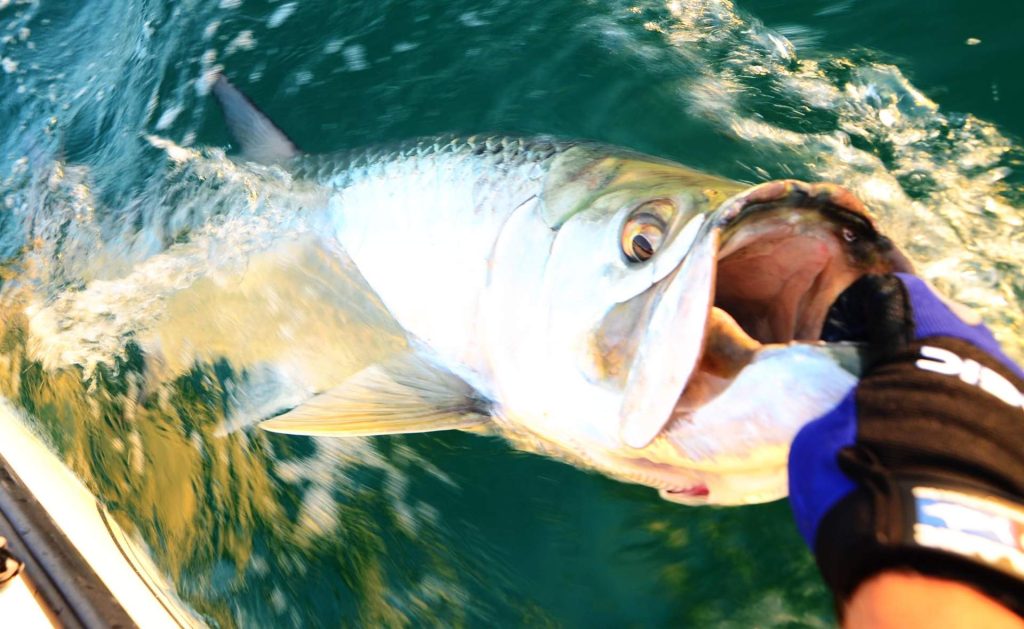
A tarpon strike is usually followed by an explosive reaction. The fish may go airborne within seconds, sometimes multiple times in quick succession, shaking its head to dislodge the hook. Each jump presents a risk of pulling the hook free. To stay connected, fishermen must “bow to the king.” This means dropping the rod tip toward the fish as it leaps, allowing a brief moment of slack to absorb the shock without tearing the hook loose.
After the initial jumps, the fight typically shifts to long, powerful runs and deep pulls. The objective is to maintain steady pressure without overloading the tackle. Letting the fish run when it needs to, then gradually gaining line when it slows, is the most effective approach. A clean, controlled fight minimizes physical damage and shortens recovery time. Depending on the fish, conditions, and equipment, the fight may last from 15 minutes to over an hour.
Boat-Side Handling and Release
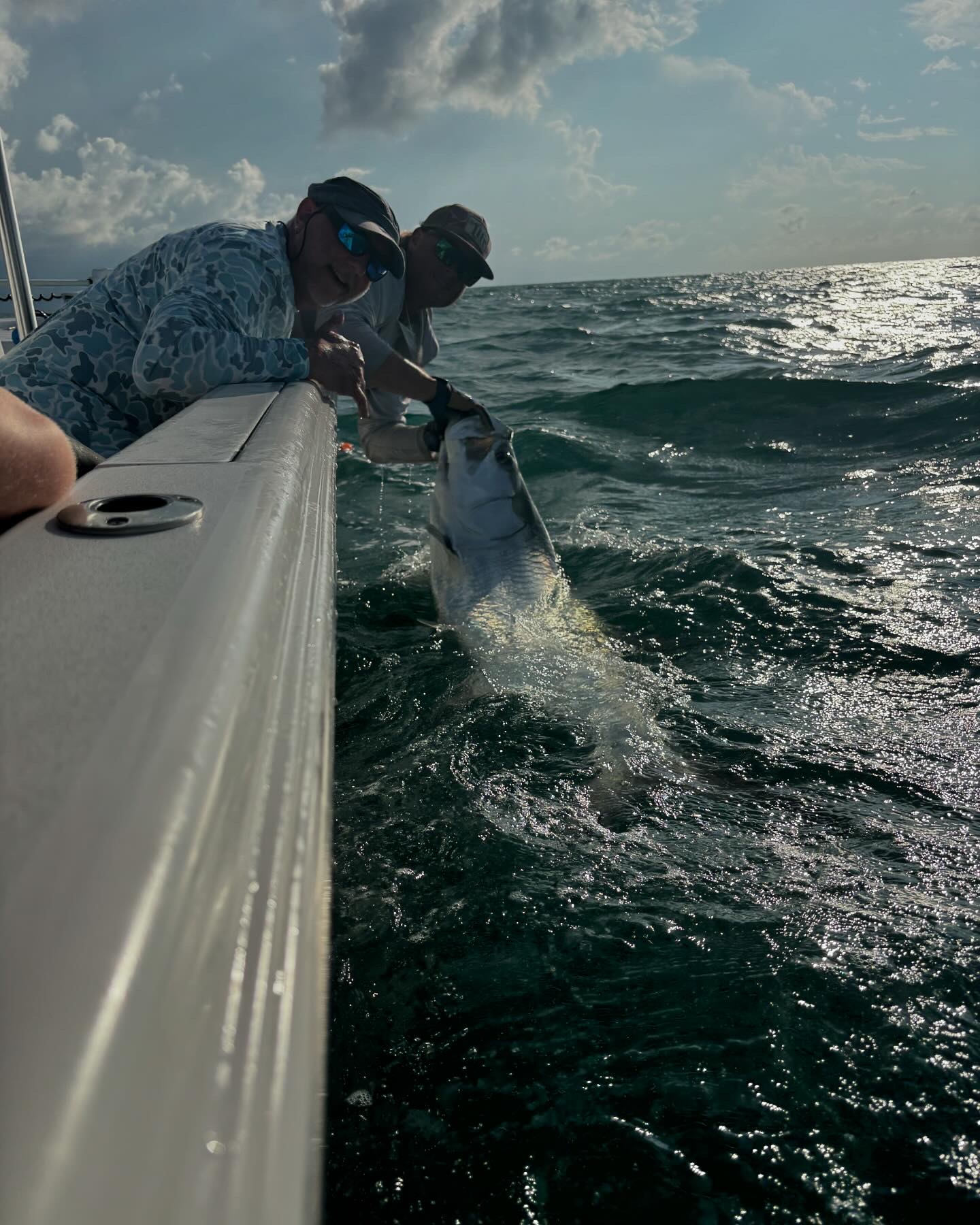
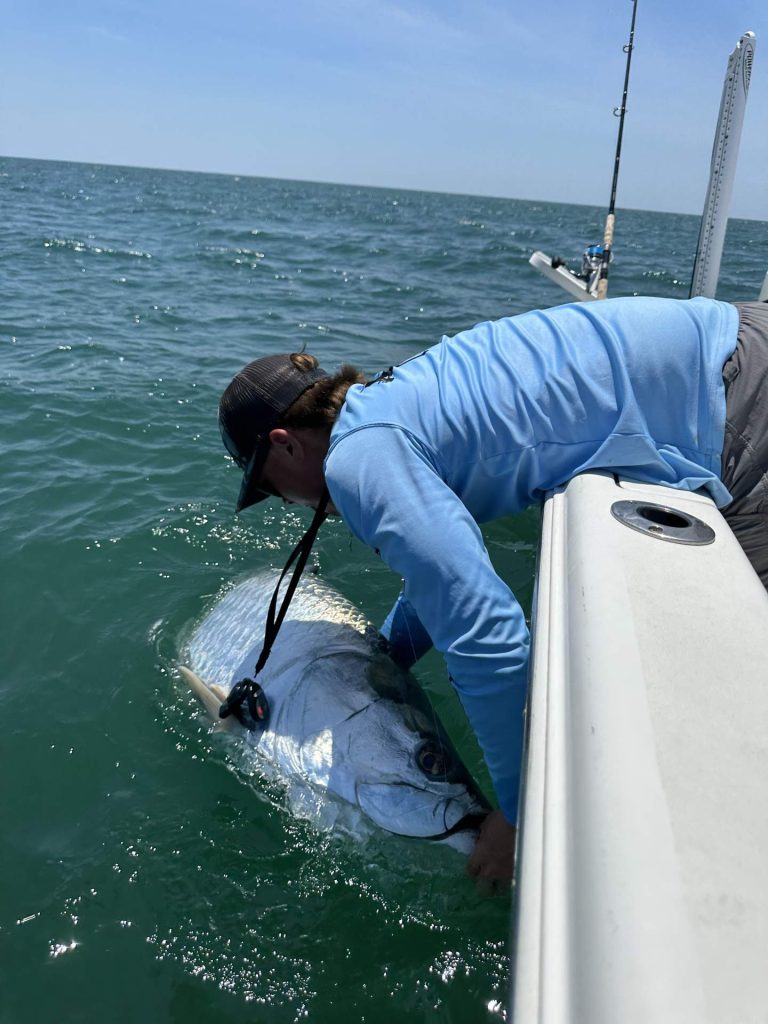
Once the fish is brought near the boat or shoreline, proper handling is critical. Most tarpon in Tampa Bay are over 40 inches and must remain in the water at all times, as required by Florida law. The following handling guidelines are essential for a safe release:
- Control the lower jaw with a gloved hand or lip grip. Avoid placing fingers inside the gill plate.
- Support the body horizontally with a second hand under the belly if the fish is calm and near the surface.
- Never lift a tarpon vertically. This causes internal injury, especially in larger fish.
- Remove the hook quickly and carefully. If it is buried too deep, cut the leader close to the hook.
- Keep the fish in the water for any photos. Avoid dragging it onto the deck, shoreline, or across the gunwale.
- If the fish shows signs of fatigue, revive it by holding it upright in the water and slowly moving forward to pass water over the gills.
- Release only when the fish is upright, balanced, and actively swimming on its own.
Handling a tarpon correctly ensures that the fish survives the encounter and continues to contribute to the health of the fishery. These steps are not just ethical; they are expected on the water in Tampa Bay.
Making the Most of Tarpon Season
Tarpon fishing in Tampa Bay is not defined by convenience or luck. It is shaped by preparation, patience, and the ability to respond to changing conditions with purpose. This is a fishery where effort is rewarded, but only when it is matched with awareness and discipline. The strikes are sudden, the fights are intense, and the moments between can stretch longer than expected. That is the nature of this pursuit. It demands attention at every stage: before the bait hits the water, during the fight, and through the release.
For many, this fish is not about numbers or size alone. It is about the way it changes your sense of time on the water. Watching tarpon roll across a flat at first light, setting up on a tide shift near the edge of a pass, or waiting for the exact right angle to cast are all parts of the process that carry weight. These details are what separate a tarpon trip from any other kind of fishing. Each encounter is earned. Each landing is the result of decisions made long before the fish comes to the boat.
Run N Gun Charters with Captain Bradley brings a focused, experienced approach to every tide and every location, running trips out of Sarasota with full access to the heart of the Tampa Bay tarpon fishery. Our priority is to keep you moving, keep you in position, and give you the strongest chance at connecting with these fish while the season is at its best. If you’re planning to fish for tarpon in Tampa Bay this summer, book your trip today.