
Sarasota’s inshore waters offer one of the most complete and accessible shallow-water systems in the state of Florida. Wide open grass flats stretch across the eastern half of the bay. Mangrove islands, oyster-laced creek mouths, and deep shoreline troughs connect every edge of the system. Beaches and Gulf passes frame the western boundary, bringing constant tidal flow and bait movement from the open Gulf. It’s all close, productive, and active in the summer. Redfish tail across flooded mud bottom. Snook feed along beach drop-offs and under dock lights. Spotted seatrout stack up over potholes and eelgrass seams. Every single day offers the opportunity to catch all three, and that combination defines one of the most meaningful goals in Florida saltwater fishing: the inshore slam.
A slam, in its simplest terms, is catching a redfish, a snook, and a spotted seatrout in a single day. That can happen by accident in the right conditions, but consistently hitting slams takes more than time on the water. It requires changing locations when most people would stay. It requires rotating tactics when the previous one still seemed to be working. It’s not just a variety count. It’s a measure of timing, judgment, and efficiency in a moving system.
Summer is the best time to try. All three species are active, aggressive, and in reach of light tackle. The patterns change every few hours, and nothing stays the same from one tide to the next. If you pay attention and keep moving, Sarasota gives you the chance to complete a slam without ever traveling more than a few miles.
What Is an Inshore Slam?
The inshore slam is a goal, not a regulation or competition format. It means catching a redfish, snook, and spotted seatrout within the same day of fishing, inshore, without relying on long runs or offshore structure. Each fish represents a different piece of the shallow water puzzle, and none of them feed the same way or in the same place. The slam reflects an ability to rotate through those differences, matching approach and water choice to the real-time conditions.
Inshore slams are a common scoring format in Gulf Coast tournaments because they demand range. A fisherman who can catch just one fish and stay on it all day might put up a heavy stringer, but the slam favors those who manage the entire bay. You need to start with a plan, adjust it based on what you see, and know when to give up on one piece of the puzzle in order to finish another. In summer, that often means shifting focus every few hours. One fish might come easy. The next two require different gear, different water, and a completely different pace.
Sarasota Bay makes this goal uniquely achievable because of its water layout. The east side of the bay is filled with grass flats and pothole networks ideal for trout. The central channels and shallow island systems hold steady redfish movement throughout the tide cycle. The beaches and western shoreline light up with snook when the sun and bait align. From the mouth of Phillippi Creek to the edge of Longboat Pass, you can reach all three species with a single skiff or kayak. That doesn’t mean the fishing is easy. But it means the opportunity is always there.

Redfish
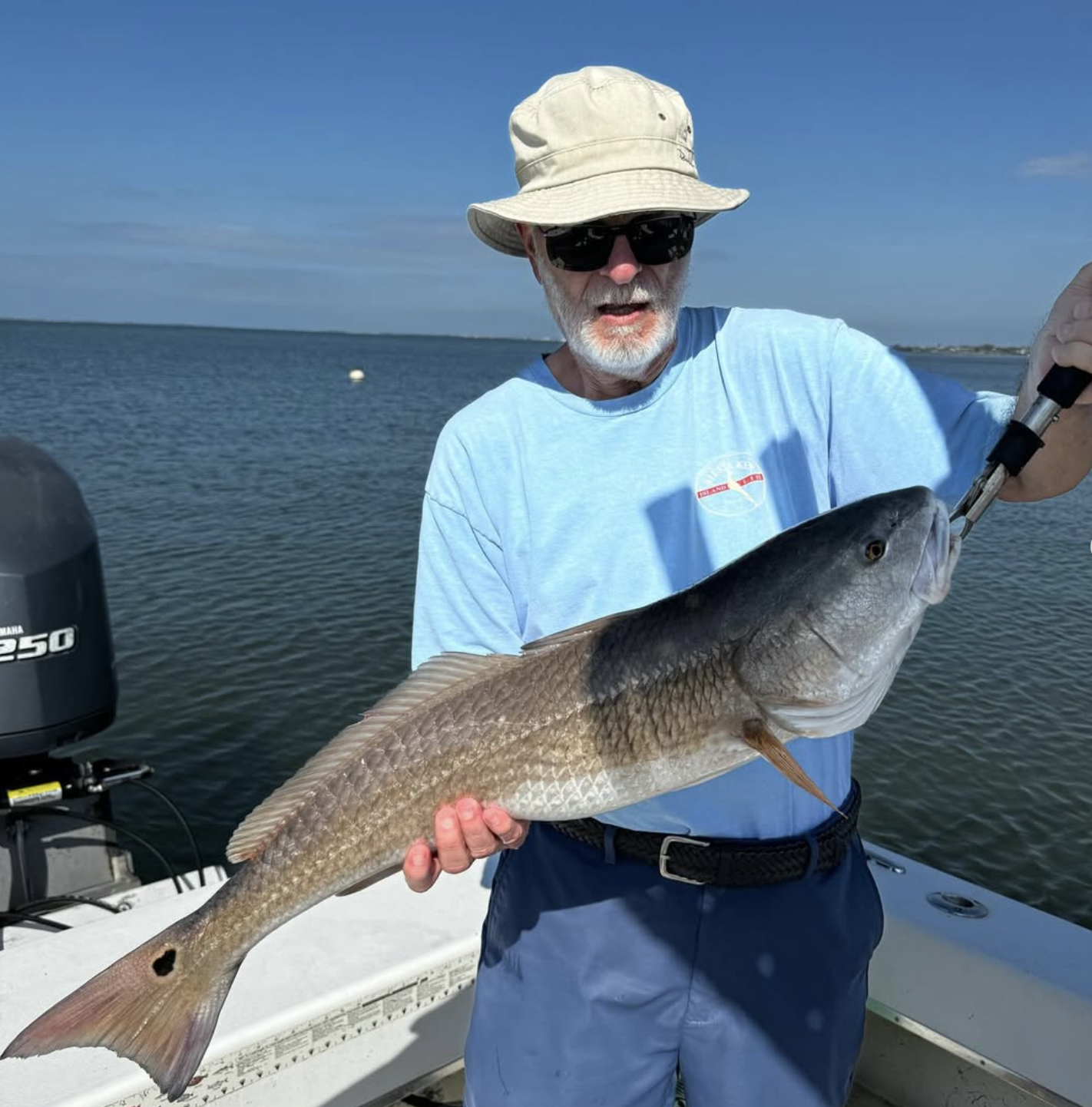
Redfish are the most consistent inshore species available during the summer in Sarasota. Their behavior is less affected by weather shifts, water clarity, or time of day than snook or trout. They can be caught on nearly any tide as long as you locate feeding structure and time your approach to the direction of water movement.
Redfish have a copper or bronze appearance, with a heavy midsection, flat belly, and blunt snout. Their mouths face downward, adapted for rooting through sediment to find small prey. The tail often carries a single black spot, but some redfish show two, three, or even more. The spot serves as a defensive feature, drawing attention away from the head during predation attempts. In Sarasota, slot-sized redfish in the 18 to 27 inch range are the most common summer targets, though overslot fish pushing 30 inches or more are regularly caught on deeper edges and around creek mouths.
Redfish feed heavily on crustaceans and mollusks during summer. Small blue crabs, mud crabs, shrimp, and snails make up a large part of their diet. They’ll also strike finger mullet, killifish, and juvenile pinfish, especially during tide transitions that bring fresh bait over structure. Redfish are drawn to water movement and texture. That means they rarely stay in uniform flats unless mullet are present. Instead, they cruise along oyster points, sand-to-mud transitions, and channel edges with submerged shell or grass clumps. They will push onto extremely shallow flats on incoming tide and drop back into deeper cuts as the tide falls.
Redfish Tactics
- Topwater plugs at dawn: Use walking-style baits over shallow mud flats or against flooded mangrove lines early before wind picks up.
- Cut bait around oyster points: Ladyfish, mullet, or pinfish chunks soaked in current next to shell bars will hold large fish during mid-day.
- Sight casting with weedless plastics: On clear flats with good light, use rigged paddletails or jerkbaits to target tailing or cruising fish.
- Live shrimp under corks: Drift a shrimp over potholes and submerged structure during slack or falling tide.
- Slow-rolled gold spoons: Bounce a spoon across mixed bottom when covering new water or when visibility drops.
Snook
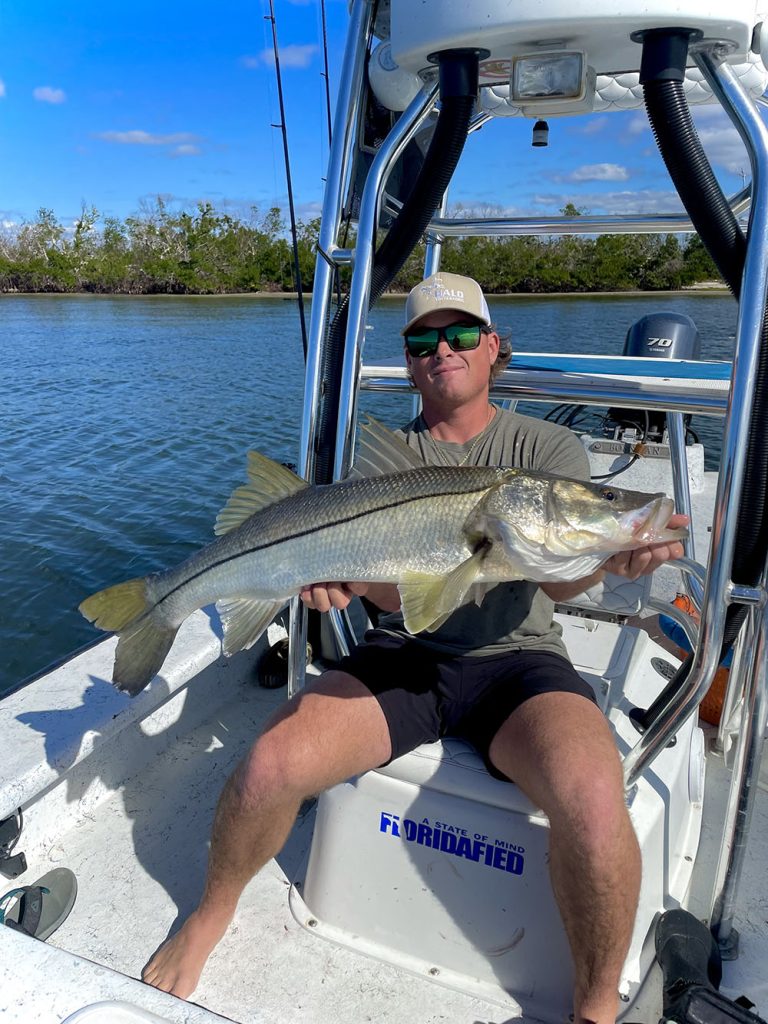
Snook are the most light-sensitive and tide-driven of the slam species. They move with precision, stage around ambush points, and use structural features to control the flow of bait. In summer, snook are also in peak spawning condition. They gather around passes, beaches, and outer bars, feeding aggressively around tide swings and positioning in predictable lanes.
Snook have elongated silver bodies with a pronounced black lateral line that runs from the gill plate to the tail. Their jaws are sharp and upturned, built to strike upward into schools of baitfish. The gill plates are rigid and can fray leaders easily. In summer, Sarasota snook range from 18 inch juveniles in the creeks and mangroves to 35 inch or larger females staging in the surf and at the outer edges of passes. Smaller males gather around the same locations and are often more aggressive when bait is thick and moving fast.
These fish feed most consistently on live bait, particularly scaled sardines, threadfin herring, and small mullet. Pilchards are the most common local baitfish and are often chummed up and cast-netted in the early morning hours by experienced fishermen. That bait can then be fished free-lined or under a small cork along troughs, eddies, and seawalls. Snook strike best when the bait moves with the current and matches the direction of tide flow. Fishing against the current often results in a refusal or lazy follow.
Snook are more likely than redfish or trout to shut down in the middle of the day, especially under bright sun and clear skies. In those conditions, shaded seawalls, bridge shadows, and dock lines become the most productive areas. Night fishing is also a top strategy, especially around well-lit bridges or marinas with steady tide flow and visible bait flickering in the light lines.
Snook Tactics
- Free-lined whitebait on the beach: Cast live pilchards ahead of cruising fish along the shoreline at dawn.
- Bridge lights at night: Use flair hawk jigs or paddletails to swing through the shadow lines of bridge pilings on moving tide.
- Suspending twitch baits in back bays: Fish hardbaits near structure where current meets shade.
- Dock skipping with soft plastics: Pitch weightless jerkbaits under docks and let them fall naturally into position.
- Live mullet at the pass: Deploy larger live baits into eddy zones and current breaks during peak tide stages.
Spotted Seatrout
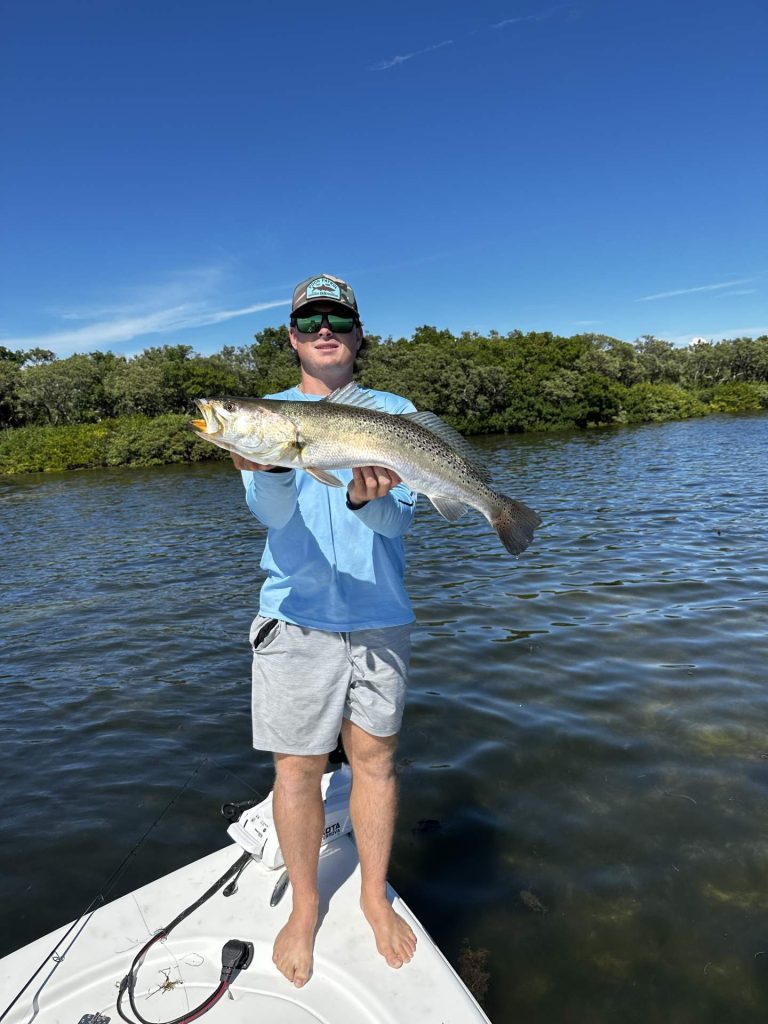
Spotted seatrout are the most schooling-oriented and widely distributed of the slam species. They feed across broad sections of grass flat and are often caught while searching for the other two targets. However, targeting larger seatrout requires different timing and location than catching school-size fish in volume. Big trout tend to isolate and hold near deeper potholes or edges where bait funnels across depth changes.
Seatrout have slim, torpedo-shaped bodies with a silvery-white belly and a greenish-gray back. The upper body is dotted with black spots that extend across the dorsal surface and into the tail. Their mouths are yellow inside and lined with fine teeth and two prominent fangs near the front jaw. These predators rely on quick bursts to strike shrimp, killifish, pinfish, and mullet up to half their own body length. Unlike redfish, which feed by rooting, trout attack from below and often suspend in the water column to watch for vulnerable movement.
In Sarasota, trout are most commonly found around the grass flats of Long Bar, the northern edge of Otter Key, and the broader flats north of Big Pass. During early morning, they will push onto shallower sections to intercept bait. As the sun rises, they slide into deeper grass and pothole terrain, especially where tide flow pushes bait over isolated depressions. Trout are often easiest to catch when drifting, covering wide areas, and casting toward any sign of depth change or bait activity.
Spotted Seatrout Tactics
- Topwater plugs at first light: Walk-the-dog baits fished across calm flats can draw explosive strikes from larger trout staging in shallow water.
- Soft plastics on jigheads drifted across potholes: Cast and slowly retrieve across mixed bottom, letting the bait fall naturally into sandy depressions.
- Live shrimp under popping corks in mixed clarity: Use this rig over grass in low visibility conditions to call fish up with sound and scent.
- Suspending twitch baits over deep grass edges: Pause between twitches to tempt suspended trout holding off ledges or current seams.
- Weighted jerkbaits along drop-offs after mid-morning: Target larger fish moving into deeper water once the sun climbs and bait spreads.
Seasonal Adjustments and Water Conditions
Summer in Sarasota brings steady heat, frequent afternoon rain, and consistent onshore winds that influence the entire bay system. Morning tides are often the most productive, especially before storms build or wind increases. High temperatures drive fish toward deeper structure, shaded zones, or areas with moving water. Freshwater runoff from creeks and canals also impacts where bait and predators settle throughout the day.
After heavy rainfall, dark tannic water flows into the shallows. Redfish continue to feed in this low clarity, often becoming even more aggressive around structure. Snook tend to move closer to cleaner outflows or set up in current cuts where bait is flushed out of the backcountry. Seatrout typically avoid the darkest zones and shift toward the edges of deeper grass or more open water when visibility drops too low.
Tide movement plays a bigger role than tide height. Strong water movement, particularly during the early stages of incoming or outgoing flow, tends to create the most reliable bite windows. When water stalls, feeding slows down, even in otherwise productive areas. Following current edges and rotating through depth changes helps stay in contact with feeding fish as conditions evolve.
Bait and Forage Movement
Whitebait, threadfin herring, glass minnows, and juvenile mullet all push into Sarasota’s bays and tidal creeks throughout summer. Early in the morning, bait schools move onto the shallowest parts of the flats to feed and escape predators. By mid-morning, they pull back toward deeper grass or sand breaks, pushed by wind or tide. Mullet schools are often more consistent, but their route and speed can shift based on temperature and boat pressure.
Gamefish rarely position randomly around bait. It’s not just about where bait is located but how it is acting. Darting, pulsing movement that shifts back and forth in a tight cluster suggests trout or snook feeding just below the surface. Broad wakes that bump bait laterally, especially near bottom, are often redfish following at distance. If the bait looks still and nervous but doesn’t scatter, the fish may already be underneath.
Presentations need to match the pace and pattern of the bait. When glass minnows are tight and moving fast, flashy and erratic baits work best. When mullet are cruising slow, a subtle swimbait or crab imitation drifted through the wake zone often gets the strike. Paying attention to these shifts helps determine which species is likely present and how to trigger them.
Running the Bay Right
Fishing Sarasota in the summer takes more than identifying productive areas or watching tide charts. The entire system responds to small shifts in wind, current direction, water clarity, and bait concentration. A shoreline that fished well on the last incoming tide may be dead quiet the next time if the mullet haven’t returned. A flat that looks perfect may stay empty all morning if the bait schools push just a few hundred yards out of range. Even the timing of cloud cover or boat traffic in a nearby channel can decide whether fish stay active or vanish.
These aren’t changes you can plan for in advance. They’re patterns that have to be tracked day by day and read as they happen. That means watching how wind reshapes a grass line, how salinity edges build up near creek mouths after a storm, and how water movement interacts with shade and structure. It also means knowing when to move, when to wait, and when to make the call to relocate even if the spot still looks good. You can’t get that from a report or a pattern from last week. You get it by being on the water when the fish make their move, not after.
That approach defines how we fish at Run N Gun Charters. We cover water, read real-time conditions, and make tactical calls based on what the fish are doing now, not where they were yesterday. If you want to fish Sarasota with that kind of awareness and adaptability, book a trip with us and see what running the bay right actually looks like.