
Southwest Florida’s nearshore fishery is one of the most dynamic in the Gulf. From September through November, as the coastline shifts from summer heat into crisp, bait-rich conditions, fishermen gain access to a mix of reef dwellers, pelagic cruisers, and transitional feeders that stage near natural and artificial structure. With the right timing, gear, and approach, it’s possible to catch snapper, grouper, mackerel, cobia, and more within just a few miles of shore. This article covers everything you need to know: where to go, what to bring, and how to make the most of the season.
Understanding Nearshore Fishing
Nearshore fishing, in Florida regulatory terms, refers to the state waters extending out to nine nautical miles from shore. This zone contains a huge variety of productive areas, including limestone ledges, patch reefs, rubble piles, artificial reef systems, sunken wrecks, and open-water bait corridors. These areas transition rapidly during the fall, driven by cooling temperatures, shifting currents, and changes in salinity and bait concentration.
While this isn’t the deep Gulf, it’s not protected water either. Nearshore trips require a watchful eye on wind, tide, and swell height. On a calm day, it’s glassy and accessible. On a wrong day, it’s rough, empty, and unforgiving.

What Happens After Summer?
As the Gulf cools from the high 80s to the upper 70s, everything changes. Baitfish push into tighter formations. Kings and Spanish move down the coast in waves. Snappers rise off structure to feed in the current. Grouper come in closer, sometimes appearing in depths as shallow as 25 feet. These aren’t subtle shifts. You can see them in water clarity, bird activity, and the drop in humidity.
Fall also marks the slowdown of tropical weather and the return of dry-season patterns. Morning breezes turn offshore. Afternoon storms become occasional instead of daily. Days get shorter, but more stable. All of this favors fishermen who can time their outings to the calm windows between early-season cold fronts.
Seasonal Species Breakdown
Species availability doesn’t just change by month; it can shift week to week. Each fish responds differently to pressure, temperature, and forage density.
Snapper (Mangrove and Lane)
Fall fishing for mangrove snapper is all about positioning. These fish tend to suspend above structure in 20 to 60 feet and respond best to steady chumming and drifted bait. While their summer spawn draws the larger adults into tight schools, the post-spawn period is still highly productive, particularly near artificial reefs and rubble piles.
Lane snapper can often be caught directly under the boat using cut squid or shrimp. They’re less sensitive to leader size and tend to favor the bottom, often mixed in with grunts and small porgies.
Use a 3000–4000 class spinning reel spooled with 15–20 lb braid, a 20 lb fluorocarbon leader, and a #2–1/0 circle hook. In very clear water, scale down. In churned-up water, go heavier and fish more vertically.
Grouper (Gag and Red)
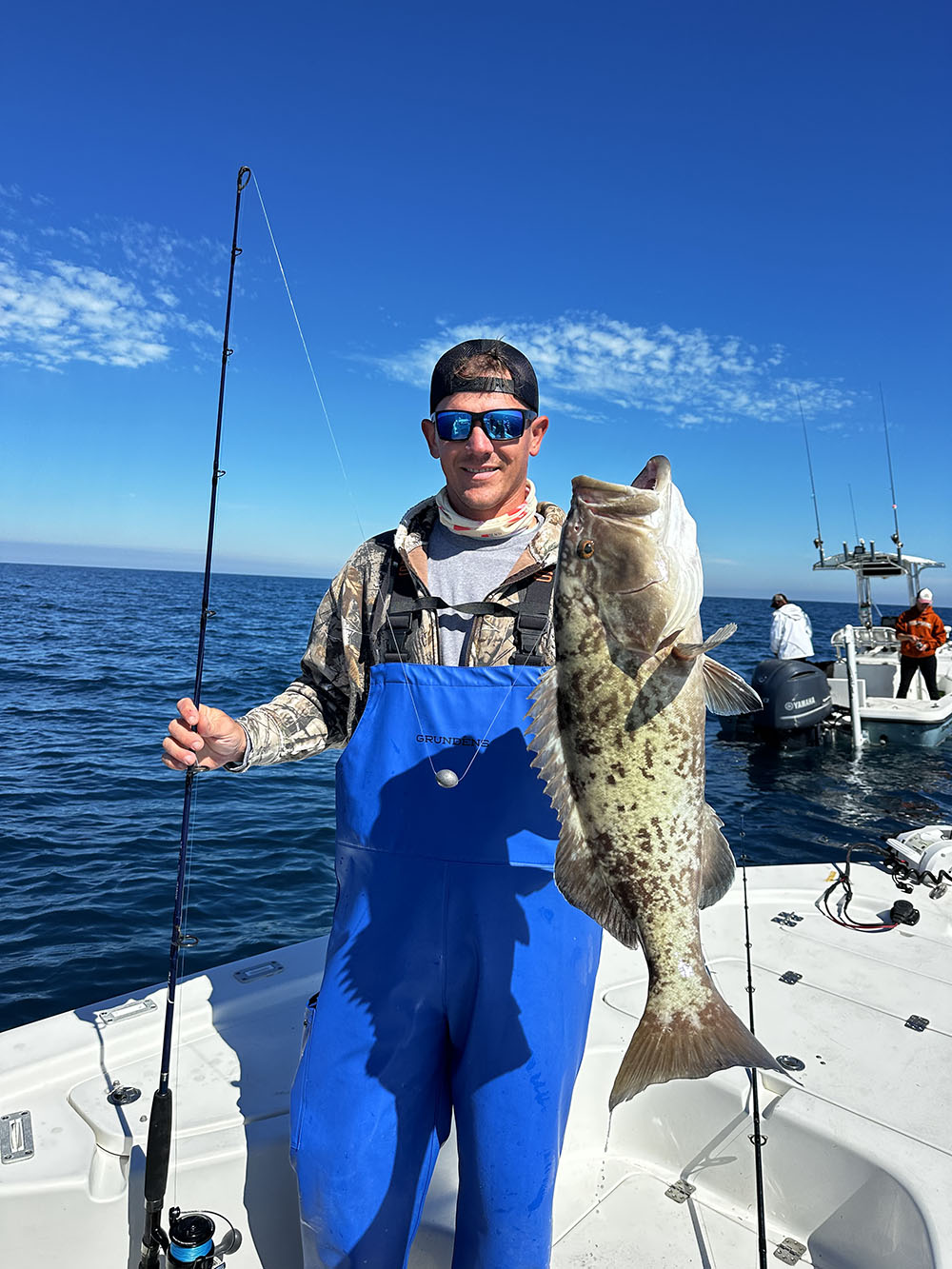
Gag grouper push inshore during the fall. These fish are structure-oriented and ambush prey by darting from cover. Target them on ledges, rock piles, or large reef modules. Gags often suspend a few feet off the bottom in low light conditions or just before a front.
Red grouper are more spread out and can be caught drifting over hard-bottom patches. Unlike gags, reds will hit dead bait readily and don’t always require pinpoint casting.
Technique Note: Drop baits on a tight line and engage the drag immediately. Grouper give you one chance to stop them before they run into structure. Delayed pressure almost always ends in a cutoff.
King Mackerel
These fish are the most mobile and aggressive of the nearshore fall species. Kings follow bait migrations and prefer water temperatures in the high 60s to low 70s. They stage along drop-offs, wrecks, and bait edges and strike with shocking speed.
Live chumming will bring them to the surface. Slow trolling threadfins or blue runners is the most consistent method. If bait is scarce, trolling planers with spoons or deep-diving plugs works too.
Use single-strand or stranded wire between 30 and 40 lb. Too heavy and they’ll shy off. Too light and you’ll get cut. Test the balance based on water clarity and how aggressively they’re feeding.
Spanish Mackerel
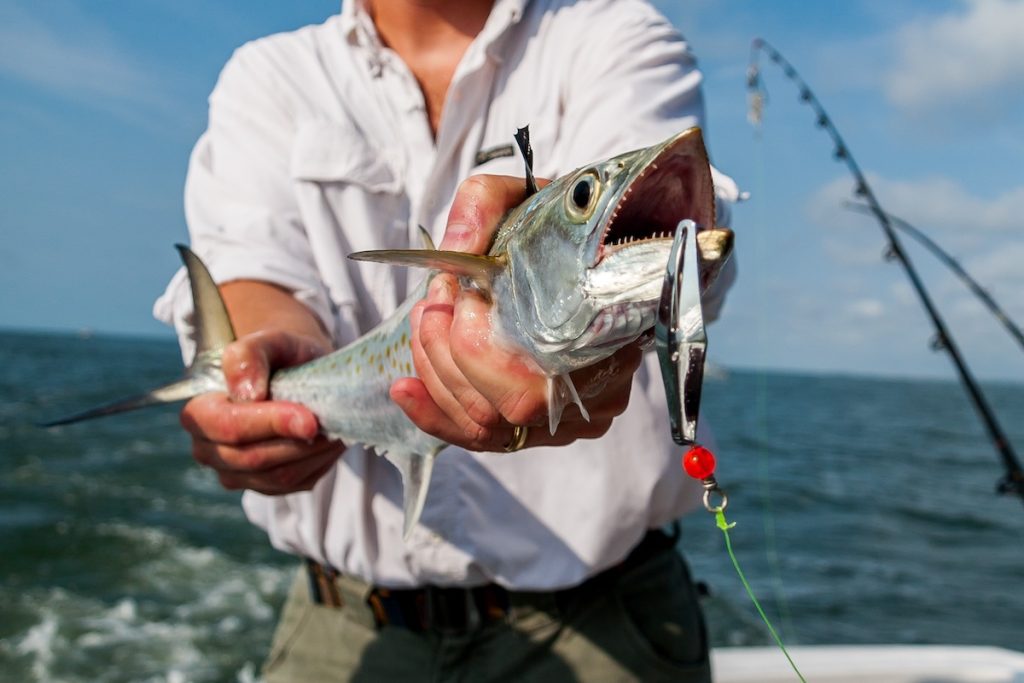
Spanish mackerel feed throughout the day but are most active during moving tides. They often appear in frenzies just outside the passes or over sandy bottom near bait schools. It’s common to find them blitzing nearshore reefs early in the morning.
These fish are perfect targets for light spinning gear. Cast metal jigs or spoons into the action and retrieve quickly. Use a long-shank hook or tie in a short trace of wire if bite-offs become a problem.
Pro tip: Spanish mackerel may scatter when pressured, but they almost always regroup. If a blitz dies out, move in slow circles around the area and look for birds, slicks, or surface ripples.
Cobia
Cobia remain a wildcard. They might swim solo, follow rays, or cruise alongside big schools of jacks or bait. You’re more likely to see them when visibility is high and wind is low.
These fish often appear near structure or while you’re reeling in another species. Always have a rod rigged with a heavy jig or a live bait on standby. Cobia are curious, but they won’t wait long.
Even small cobia thrash violently once onboard. Clear the deck, have your net or gaff ready, and give them space until subdued.
Techniques and Gear
The diversity of fall nearshore species means no single rig or method will cover every opportunity. Instead, each approach should be chosen based on target species, structure, water clarity, and bait availability. While some methods remain consistent year-round, fall introduces a few tactical wrinkles that can make or break a trip.
Bottom Fishing for Structure Species
Use a fish-finder or knocker rig with enough weight to hold near the bottom. A 5-foot fluorocarbon leader helps reduce visibility, and a strong circle hook improves retention. Grouper will favor large live pinfish or grunts. Snapper may prefer cut sardines or shrimp.
Quick Rig Setup:
- 50 lb braid main line
- 40–60 lb fluorocarbon leader
- 6–10 oz egg sinker for deep reefs
- 7/0–9/0 inline circle hook
Trolling for Migratory Fish
For kings and Spanish, spread your trolling setup both horizontally and vertically. Run a flatline, a bait behind a #1 or #2 planer, and a third bait off a midline cleat. Vary speed between 3 and 6 knots. Match spoon size to baitfish in the area.
Pitching and Casting
Keep a fast-action spinning rod rigged at all times. Use a bucktail jig tipped with squid or a swimbait for cobia or big mackerel that show up near the surface. When sight casting, lead the fish by several feet and retrieve just ahead of its nose.
Environmental Conditions and Timing
The seasonal rhythm of nearshore fishing is dictated by a combination of temperature, wind, barometric pressure, and bait movement. Fall introduces variability, but within that variability are distinct patterns that favor well-timed trips. Understanding when and how these conditions shift lets you plan outings that align with both fish activity and safe access.
Late Summer into Early Fall
- Water Temperature: 84–87°F
- Common Conditions: Humid mornings, thunderstorm build-up by 1–3 p.m.
- Key Strategy: Fish early, target suspended snapper and scattered kings
Mid to Late Fall
- Water Temperature: 74–78°F
- Common Conditions: Lower humidity, light north or northeast winds, improving clarity
- Key Strategy: Fish between fronts, look for bait edges and pressure drops
Wind and Sea State
Wind direction matters more than strength. A steady west wind at 10 knots can still allow access, but a 12-knot north wind stacked against tide will create tight, steep chop. Avoid days with fast barometric changes unless you’re fishing pre-front conditions.
Ideal Window: Two days after a front, when seas calm, bait returns, and high pressure levels out.
Where to Launch
Southwest Florida has dozens of reliable access points into the nearshore zone. Here are a few of the most strategically located ramps:
- Punta Rassa Boat Ramp (Fort Myers): Direct access to Sanibel, Captiva, and the outer islands
- Pineland Marina (Pine Island): Launch to Charlotte Harbor reefs and nearshore ledges
- Caxambas Park (Marco Island): Access to reef systems and passes just south of Naples
- Placida Park (Boca Grande): Gateway to Gasparilla Pass and the Gulf’s northeast corner
Check tide schedules before launching and confirm any seasonal closures or usage restrictions. Some county ramps may require payment or annual permits during high season.
Bait and Preparation
Live Bait Options
- Threadfin herring and scaled sardines (pilchards): Preferred for kingfish, snapper, and Spanish
- Pinfish and grunts: Ideal for grouper and cobia
- Blue runners: Used for slow-trolling and targeting smoker kings
Bait can be caught with sabiki rigs around bridges, markers, and grass flats at first light. Bring a backup supply of frozen squid or threadfin in case bait is scarce.
Storage and Handling
Use a round livewell with adequate flow. For frozen bait, insulate with dry ice or ice packs and avoid freshwater contact. Bring scissors, dehookers, bait knives, and chum blocks in sealed containers to prevent deck mess.
Regulations to Know
Florida’s nearshore species are tightly regulated. Always check MyFWC.com before your trip.
| Species | Min Size | Bag Limit | Season |
| Mangrove Snapper | 10 in TL | 5 per person | Open year-round |
| Lane Snapper | 8 in TL | 100 lb aggregate/person | Open year-round |
| Red Grouper | 20 in TL | 2 per person | Open in state waters |
| Gag Grouper | 24 in TL | 2 per person | Sept 1–14 only |
| King Mackerel | 24 in fork | 3 per person | Open year-round |
| Spanish Mackerel | 12 in fork | 15 per person | Open year-round |
| Cobia | 36 in fork | 1 per person / 2 per vessel | Open year-round |
Use non-stainless circle hooks when fishing natural bait for reef species. Carry a descending device or venting tool and know how to use it.
Making the Most of the Season
Fall nearshore fishing in Southwest Florida offers more than variety. It delivers close-range opportunity with structure-oriented species, bait-driven predators, and weather patterns that reward planning. The key isn’t just knowing where the fish are. It’s knowing when to make the move, how to approach the reef, and what signals tell you to switch from bottom to surface, from bait to jig, or from search to setup.
Some trips lock into mangrove snapper holding off the ledges. Others chase kings along bait lines or drift patch reefs waiting for cobia to rise. Every day brings a new opportunity if you’re rigged right and ready to adapt.
For fishermen who want that experience with someone who’s already dialed into the fall rhythm, Run N Gun Fishing Charters offers custom nearshore trips out of Southwest Florida, built to match seasonal movement, real-time conditions, and tactical opportunity. Book a trip with us to get on the water when the fish are active, the weather’s right, and the action stays close to the coast.