
Springtime fishing in Sarasota is heating up, and if you’re looking to get on the water, now’s a great time to do it. The weather is settling into that perfect range—not too hot yet, but warm enough that the fish are shaking off their winter sleepiness. Water temperatures are creeping up, hovering in the low- to mid-70s inshore, and that’s triggering some solid feeding activity.
Baitfish are showing up in bigger numbers, and the usual suspects—snook, reds, and trout—are right there with them, getting more aggressive by the day.
Just a few weeks ago, we were still dealing with some cold fronts that kept the bite inconsistent, but now, we’re seeing more stable conditions, and the fishing is following suit. Snook are sliding out of their winter hideouts, redfish are grouping up on the flats, and trout are settling into their usual spots on the deeper grass beds.
Meanwhile, further out and along the beaches, the mackerel and kingfish bite is starting to heat up, and cobia are making their spring appearances in Sarasota. As you can tell, whether you’re casting around the mangroves, drifting the passes, or chasing bigger fish nearshore, there’s something going on just about everywhere right now.
March into early April is sort of a “transitional season” but in a good way—the fish in season in Spring in Sarasota are moving, feeding, and getting more predictable. Here’s what’s biting now and what to expect as we move deeper into spring.
Inshore Action
Snook, Redfish & Sea Trout
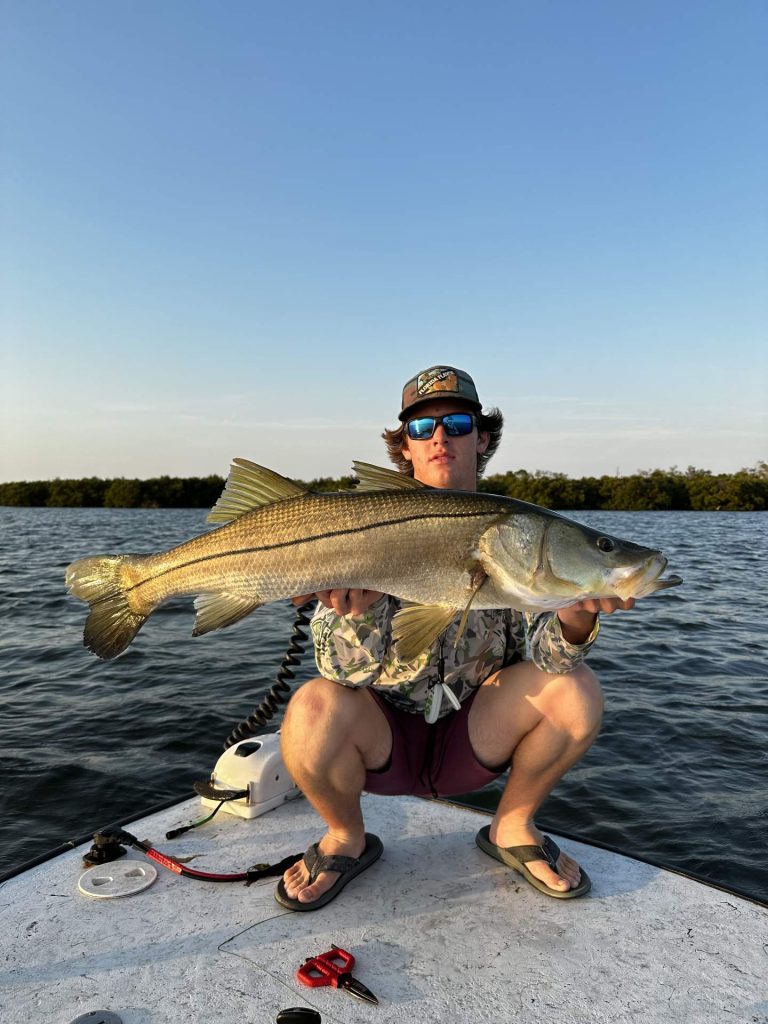
As the water temperatures rise into the 70s, snook (Centropomus undecimalis) are coming out of their winter haunts and feeding aggressively. You’ll find them around mangrove shorelines, docks, and bridges, especially where there’s a good current. “Linesiders” are structure-oriented predators, using shadows and obstructions to their advantage while hunting. As tidal flows push bait through these areas, the fish position themselves strategically, waiting for an easy meal. Strong outgoing tides, in particular, concentrate baitfish and crustaceans, triggering a feeding frenzy.
Pro Tip: Live bait like sardines or shrimp will get the job done, but if you prefer artificials, topwater plugs and soft plastics work well in the early mornings.
Redfish (Sciaenops ocellatus) or red drum are also active, especially on higher tides when they push up into the mangroves. Look for them in the shallows near oyster bars and grass flats. Unlike snook, reds are less picky and will take cut bait, live shrimp, or artificial lures like gold spoons and paddle tails.
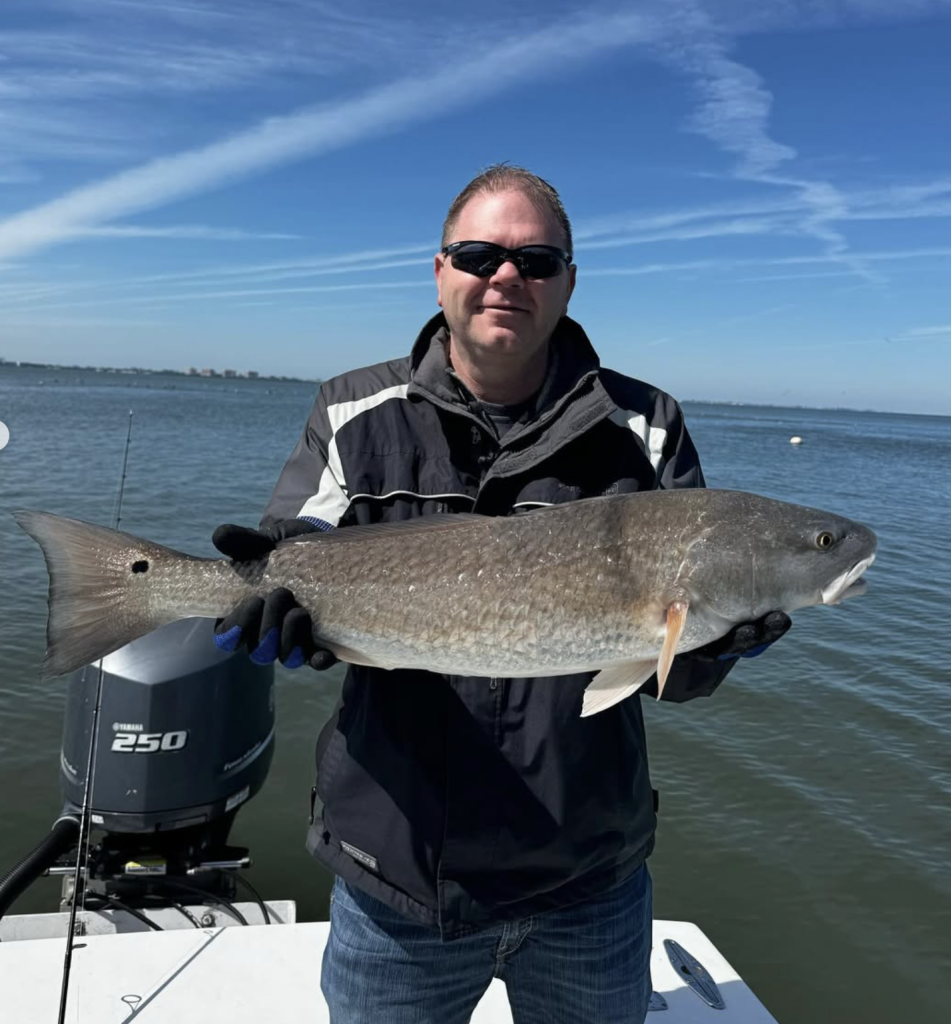
Because redfish are bottom feeders by nature, they often rely on their keen sense of smell to locate prey. This makes scented soft plastics and fresh-cut bait particularly effective, especially when the fish are hunkered down and less aggressive. While reds will readily take a variety of presentations, stealth and patience are key when stalking them in shallow water—especially on calm days when they can be wary of sudden movements or loud noises.
Pro Tip: Paddle tails rigged on a jighead are highly effective, especially when worked slowly along the bottom in sandy potholes or near submerged structure. In clear water, natural colors like silver, white, or green can produce, while in murkier conditions, brighter hues such as lime green or pink help get their attention.
As spring progresses, reds will continue to follow the tides, making their way between deeper channels and shallower feeding areas.
Speckled/Spotted seatrout (Cynoscion nebulosus) fishing is excellent on the deep grass flats. If you’re fishing the Sarasota Bay area, targeting depths of 3 to 7 feet is your best bet.
The presence of baitfish is a strong indicator of sea trout activity—look for diving birds, surface disturbances, or flashes of silver beneath the water. During colder mornings or after a weather front, trout may hold slightly deeper until conditions stabilize, making a slower presentation more effective.
Pro Tip: Free-lined live shrimp, soft plastics on a jig head, or popping cork setups all work well. Some bigger trout, often over 20 inches, are mixed in, so don’t be surprised if you hook into a gator trout!
Nearshore Bite
Spanish Mackerel, Kingfish & Cobia
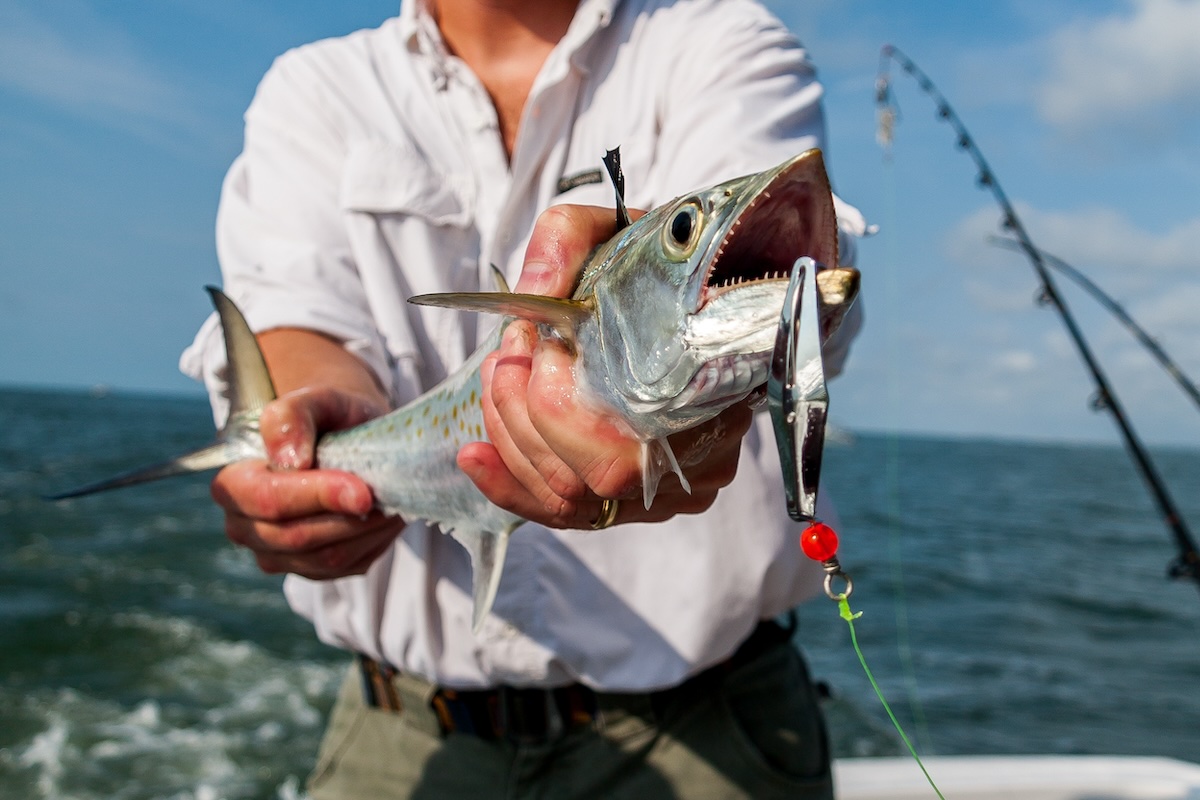
Just off the Sarasota beaches, Spanish mackerel (Scomberomorus maculatus) are thick, feeding on glass minnows and other baitfish. Look for birds diving, as that’s a dead giveaway that mackerel are in the area. They’ll hit fast-moving lures like spoons, Gotcha plugs, and flashy jigs.
King mackerel (Scomberomorus cavalla), or just kingfish, are showing up as well, especially around artificial reefs and deeper ledges. Trolling live bait like blue runners or threadfin herring is the best way to get a bite, but they’ll also take big spoons and diving plugs. (Low-trolling large dead baits, such as ribbonfish, can also produce strikes.) Kingfish will often school up near bait concentrations, so keeping an eye on diving birds and surface activity can help locate them.
On calm days, sight-fishing for them around bait balls or near the surface can be an exhilarating way to hook into a smoker king. When targeting larger fish, upgrading to heavier tackle can prevent break-offs during their long, drag-screaming runs.
Cobia (Rachycentron canadum) are another exciting nearshore catch this time of year. They like to hang around channel markers, buoys, and floating debris. Sometimes they’ll even swim right up to the boat, giving you a chance to pitch a live pinfish or an artificial eel right in front of them.
Pro Tip: Cobia are notorious for following sharks, rays, or sea turtles as they search for food.
Along with channel markers and floating debris, cobia frequently gather around nearshore wrecks and artificial reefs, where they pick off smaller fish and crustaceans. A well-placed chum slick can sometimes draw them in, making it easier to get a shot at a passing fish. If they’re hesitant to bite, a change in lure color or a slower presentation with a jig tipped with a strip of squid or a soft plastic can trigger a strike. Since cobia are powerful fighters, a stout rod and a good amount of patience are key to landing them successfully.
Sheepshead, Pompano & Tripletail
Sheepshead (Archosargus probatocephalus) are still around in good numbers, especially near docks, bridges, and rock piles. Right now in Sarasota they’re feeding on barnacles, crabs, and shrimp.
Pro Tip: “Convict fish” (a nickname for sheepshead) are known for their incredible knack for stealing bait, sheepshead require small, sharp hooks and a bit of finesse to hook successfully.
Fiddler crabs, sand fleas, and small pieces of fresh shrimp work well, especially when fished near pilings, dock edges, and bridge supports. Lightly knocking a rig against the structure can dislodge barnacles, creating a natural chum effect that draws them in. The bite is often subtle, so staying alert and setting the hook quickly makes a big difference.
Pompano (Trachinotus carolinus) are biting well in the passes and along the surf. Tidal movement plays a big role in finding active pompano, with strong currents pushing baitfish and crustaceans into prime feeding zones. Drifting sand fleas or shrimp in moving water is a good way to hook into them, and jigs bounced off the bottom work well too.
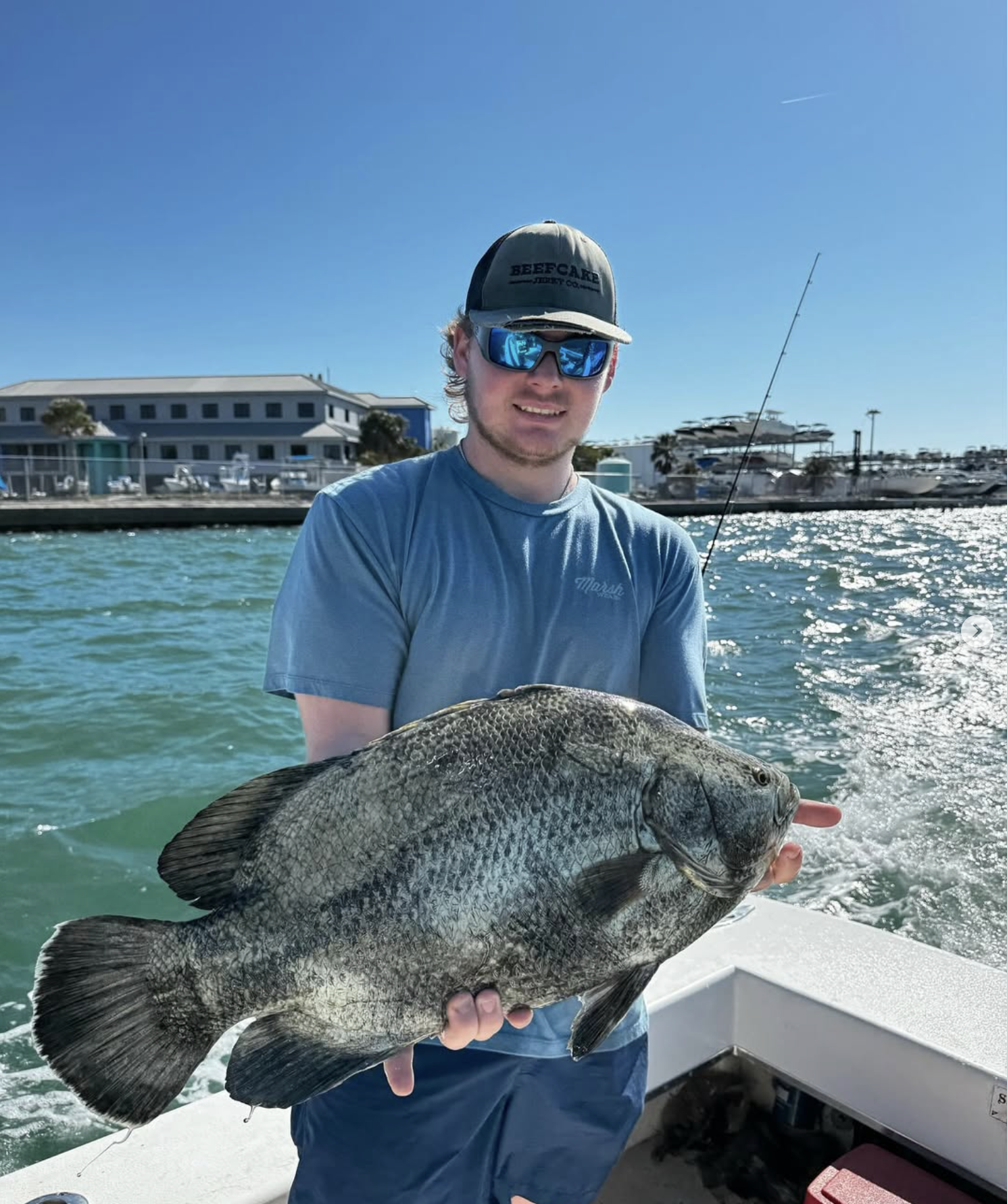
Tripletail (Lobotes surinamensis) are lurking around crab trap buoys and floating debris offshore. They’re not always easy to spot, but if you find one, cast a live shrimp or small baitfish their way—they’re usually willing to bite. Tripletail blend in with their surroundings (especially when they’re around those buoys, debris patches, and channel markers) and will often sit there frozen until a bait lands nearby.
A well-placed cast with a live shrimp or small baitfish usually gets a reaction, but if one ignores the initial presentation, letting the bait sink naturally or giving it a small twitch can trigger a strike. Once they’re hooked, tripletail will bolt for cover, so keeping steady pressure and guiding them away from structure helps avoid break-offs.
Bigger Targets: Tarpon & Black Drum

Tarpon (Megalops atlanticus) are starting to show up, though the big push doesn’t usually happen until late April into May. The early-season fish are often found in the backwaters and bays before they move to the beaches for the main migration.
Black drum (Pogonias cromis) are another good springtime target, especially the big ones that school up near bridges and deep channels. These fish can get massive, over 40 pounds, and they’ll take cut bait, shrimp, or even small blue crabs.
Looking Ahead to Late Spring
As we move into late April and May, expect the action to take off even more. Tarpon fishing will become the main focus for many fishermen, while the nearshore bite for kingfish, cobia, and permit will stay strong. The inshore waters will continue to hold plenty of snook, redfish, and trout, and as baitfish numbers increase, the fishing only gets better.
Right now, the fishing in Sarasota is solid across the board. Whether you’re looking for inshore action, nearshore excitement, or even something bigger, spring is one of the best times to be on the water.
Ready to hit the water? Book your trip with Captain Bradley of Run N Gun Fishing Charters! Call (941) 662-6369 or click here to book a trip instantly online!